

This month I saw movies in all the major theatrical film gauges: 16mm, 35mm, and 70mm. I also rewatched a few things—which is unusual for me—but that allowed me the chance to feel more confident about some of my relatively unusual scores for a couple of the most beloved films of 2025.
Bugonia
Ireland, South Korea, United States of America, Canada | 2025 | 118m | English
This review contains spoilers
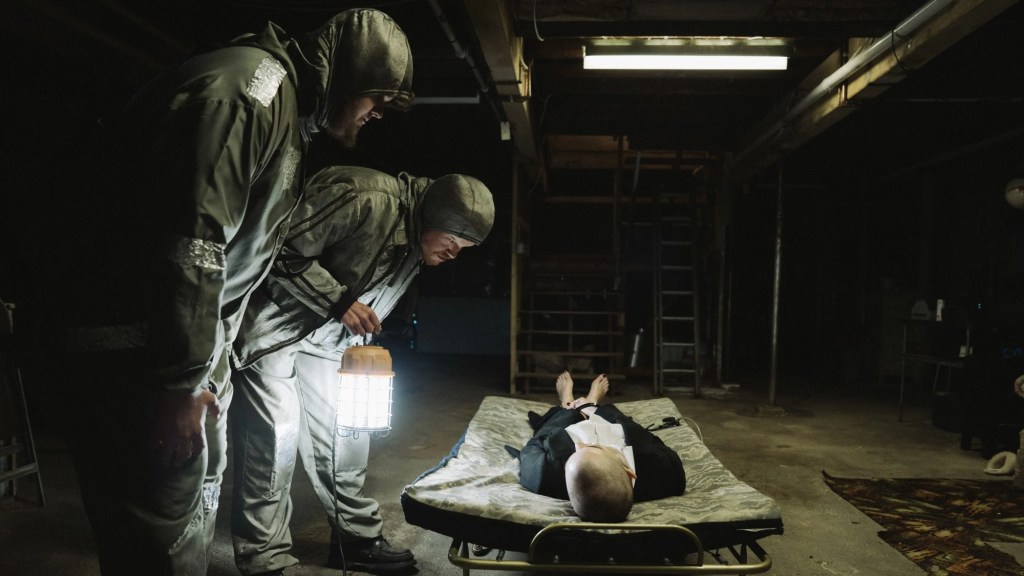
I’m approaching Bugonia from the perspective of someone who first watched Save the Green Planet!, so I just can’t help but make comparisons to that source material. It might be unpopular to say this, but I actually think that the Hollywood remake is better than the original. It’s way better shot, it’s got a tighter script, it develops its characters more fully, and it avoids the jarring tonal shifts that plagued the Korean original. (No inexplicable kung-fu sequences or distracting police office drama here, thankfully.)
That said, I am glad that I have seen both versions of this story. They aim for different emotional impacts. A sense of overwhelming anger and misanthropy stuck with me after Save the Green Planet! concluded, while Bugonia felt more somber and sympathetic. The protagonist of the original, while certainly the victim of so many injustices it borders on comedic, comes across as an utter psychopath who deserves his demise. Meanwhile, his female partner is a bizarre character played mostly for laughs. Bugonia‘s Teddy and Don, on the other hand, feel much more grounded and real. As gullible as Teddy may be, he’s fighting back the only way he knows how—and at the end of the day it doesn’t matter that he has correctly identified the root of all evil in the world; he’s mocked and murdered regardless. It’s frustrating. It’s tragic.
The gender swaps of the CEO and partner characters, mixed with the early chemical castration scene and revelation from the cop character (who I could never not see as simply Cumtown host Stavros Halkias, but that might be my own problem), lend the story a certain psychosexual undertone that feels appropriate in explaining Teddy’s behavior.
There’s something to be said about the difference in the way the two films end. In Save the Green Planet!, Earth explodes and the credits play over debris floating through space. Bugonia spares at least the animals and the bees. It asserts that there may yet be a way forward for the green planet, after all. Of course, it’s still an ultra-pessimistic, anti-human stance that feels uncomfortable coming from Hollywood, whose real life sympathies undoubtedly lie more closely with the neoliberal, girlboss CEO character than any of the downtrodden, populist hoi polloi.
I might have left Bugonia feeling more thoughtful about it had I not already spent a couple months wrestling with the themes of Save the Green Planet!. What I can say is that Bugonia is unquestionably a better made, more mature film. It more strongly conveys sadness as opposed to the original’s anger, and while I think both emotions are apt given this story, the more somber tone resonated better with me.
Re-Wind
Japan | 1988 | 65m | Japanese
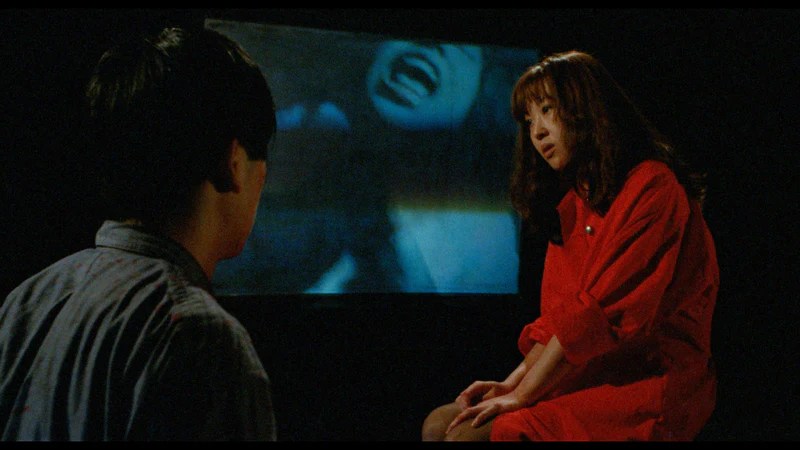
Alright, maybe we won’t pick this one for family movie night. Re-Wind is deeply fucked up. I’m talking underground. No, subterranean. But viewers willing to take the plunge will enter into a dark, seedy underground world of alienation and obsession. The atmosphere this movie achieves is thicker than most films could ever hope to match. It makes Videodrome look like a Disney Channel original movie. The camera is the weapon. Voyeurism is violence. Are we, the viewers, any better than the sick characters in this movie?
www.RachelOrmont.com

United States of America | 2024 | 80m | English
If David Lynch had been born in 1990, maybe he would have made films like this. Maybe some people will balk at that invocation, but I’ll stand by it. Lynch + Truman Show + PornHub + your Twitter feed in 2020 = the vibe of www.RachelOrmont.com. No other movie I’ve seen so completely embodies the word “brainrot.” You need to have been chronically online since at least, like, 2016 to understand half this movie. Actually, I don’t think anyone can fully understand this movie… but that’s also kind of the point. Surreal, hilarious, obscene, grating, and sad. Absolutely not for everyone. In fact, I imagine most people will hate it. But for me, www.RachelOrmont.com worked. A truly one-of-a-kind movie that will probably one day be seen as a prescient cult classic.
Hamnet
United Kingdom, United States of America | 2025 | 126m | English
This was the last of the big Oscar 2026 contenders that I felt I needed to see in order to prepare for the awards show. I avoided it for a while because I generally don’t care for stories in this kind of ye olde England setting, Shakespeare doesn’t do a lot for me, and with a baby currently on the way I wasn’t sure if I wanted to see a story about child death.
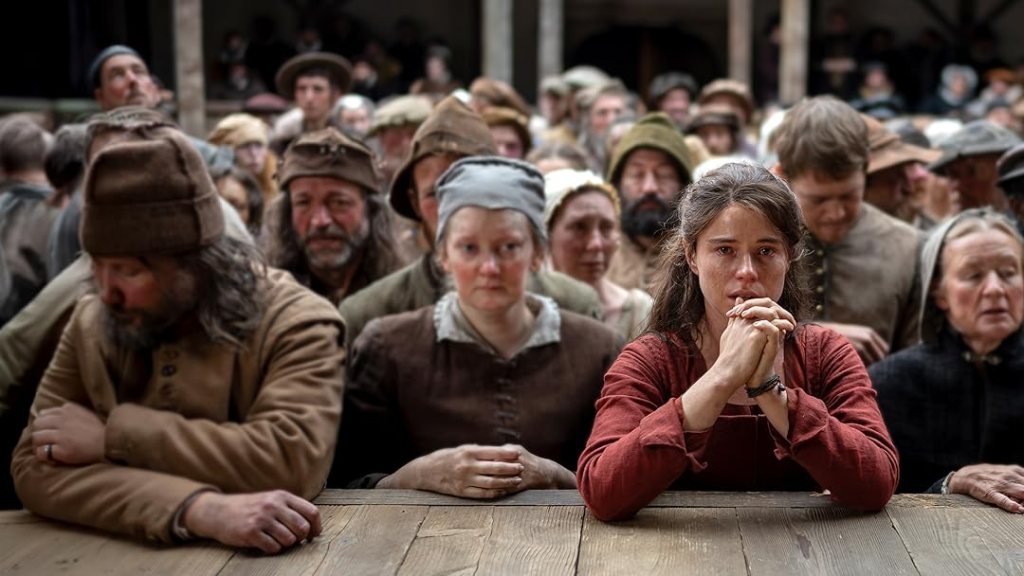
I’m glad I watched it, though. Hamnet is a beautiful film, gorgeously shot and acted, about art as a way to work through grief. It made me cry like at least 4 times, so that’s got to count for something.
I can totally see some people being bored by this, but I was surprised by how little I was tempted by the playback speed button on 123movies.com as I watched. (I’m remembering being in this position last year, binging the Oscars heavy hitters that I hadn’t yet gotten to… buddy, I could not imagine watching Conclave in anything less than 1.5 speed.)
So yeah, Hamnet is a certified “good movie” even if you can argue that it is emotionally manipulative and purpose-built to make you cry. Hey, I mean… it worked.
Sentimental Value
Turkey, Norway, France, Denmark, Sweden, Germany, United Kingdom | 2025 | 133m | Norwegian, English, German, Swedish
My initial viewing of Sentimental Value really didn’t sit right with me. I felt like I had missed whatever it was that wowed everyone else. I couldn’t figure out why I hadn’t connected with it any more I did, since, well, not to reveal too much about myself, but there are themes in this film that I felt ought to have resonated much more deeply with me.
With Sentimental Value popping up unexpectedly on Amazon Prime Video and the Oscars tomorrow night—where the film has a sizeable number of nominations—it felt like today was the day to give it another chance.
My opinion has changed a bit. I think Sentimental Value is better the second time through. The strong acting performances of everyone stood out to me more this time around. This movie relies completely on those performances, because—apart from a couple of powerful film-within-a-film moments—Sentimental Value is relatively somber and unexciting. That’s why I still can’t give this movie anything above a 3.5: for much of the runtime it feels like it just plods along. With about an hour left to go, it feels like it’s running precariously low on momentum. I kept trying to interpret the film through the lens of the opening narration, which tells us that Nora envisioned herself as the family home, flawed in its foundation—yet I can’t shake the feeling that this metaphor is left underdeveloped as the story progresses.
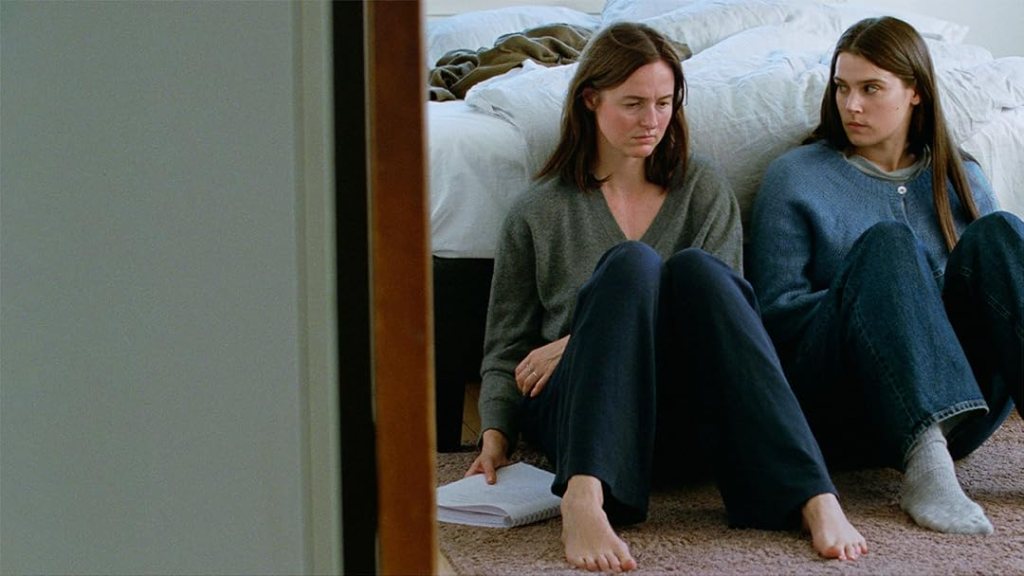
Luckily, within about the last 20 minutes we get the two strongest scenes of the film, both of which had been turning over in my mind in the months since I originally saw the film. I’m talking about the scene between the two sisters on the bed and the final sequence. The former is among the most moving scenes of any film of 2025, at least to me as I related it to my own life experiences. Again, I’m not going to say too much there. Then there’s the ending—which, as others have pointed out, isn’t really a happy ending after all. Nora reconnects with her father, but it’s only because she has acquiesced to his terms. Who’s to say that once his next movie wraps up, he won’t move on from her again, as he did with her sister Agnes all those years ago?
This is a movie that aims to stir up complex emotions. If that should have worked on anyone, it should have worked on me, given the nature of this story. This time around it reached me a bit better, but I still don’t consider it a complete knockout masterpiece. I still like Jay Kelly better, to be honest. It wouldn’t make my top 10 favorite movies of 2025. But Sentimental Value does poke at something buried, tangled within my memories and emotions. It is a film that has stayed with me since I first saw it and I expect it will continue to.
Inherent Vice
United States of America | 2014 | 149m | English
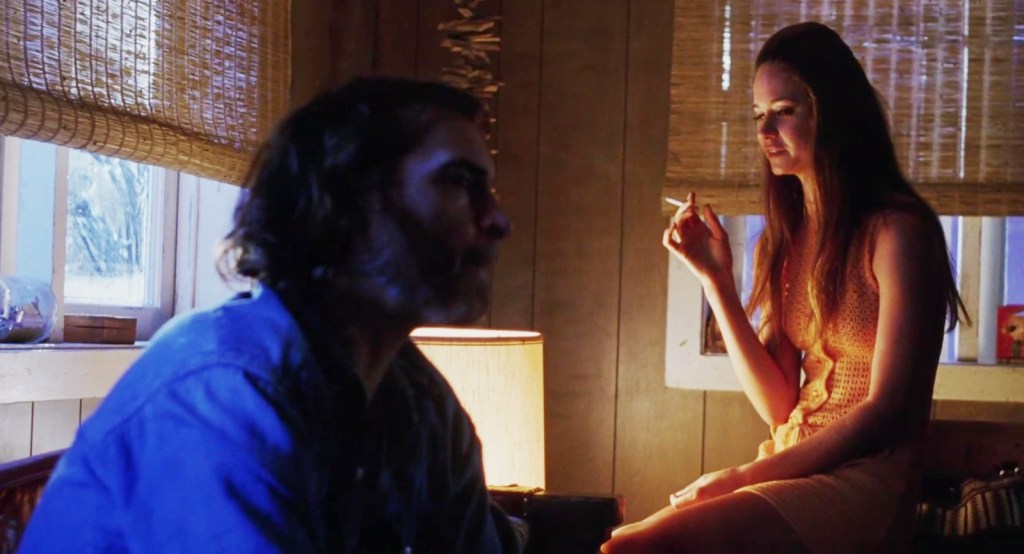
Funny and enjoyable in fits and bursts but I had a tough time following this. Reading other reviews, I get the sense that I’m not the only one. I remember feeling similarly whenever I’ve read Pynchon, so maybe that was the point. There’s a lot of talent on display in this movie, but 150 minutes is a long time to spend feeling confused and disconnected. This is probably one of those movies that is better on a rewatch, but given the punishing length, I can’t imagine I’ll return to it any time soon. You dig?
Sirāt
Spain, France | 2025 | 115m | Spanish, Arabic, English, French
This, along with Sentimental Value, were the two movies of this year that I felt I most needed to rewatch. Both movies were acclaimed festival darings that failed to impress me. (Sirāt is to my 2025 what Universal Language was to my 2024.) When I first saw Sirat during TIFF 2025 at a 10pm showing, I could barely keep my eyes open. When the movie concluded and I was left feeling like I must have missed something, I resolved to give it another chance. I mean, it’s got an EDM soundtrack and I love those, for goodness sake! This is something I should have liked, right?
I’m glad I gave Sirāt another try. There were many, many scenes that I had zero memory of. (There’s a dog in this movie!?) I am glad I gave it another viewing because now, having watched it for a second time, I can now more confidently declare that it truly is a 2.5 out of 5 kind of movie.
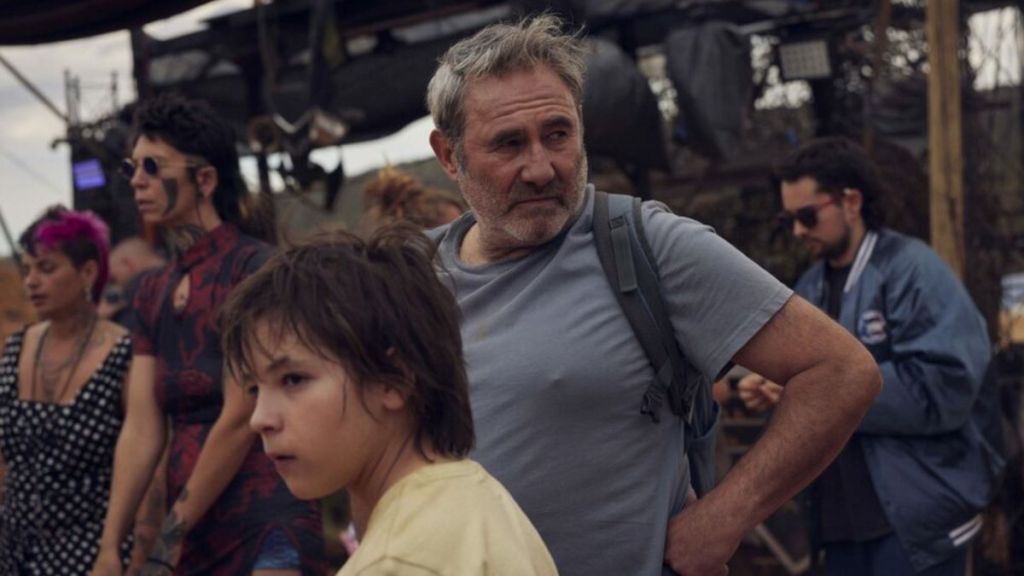
Tell me, what is the point of Sirāt? What is it saying? At my most generous, I would say that it is a statement on European colonization of the African desert—its precariousness and its (perhaps deserved) hostility towards the foreigners who come to take drugs and rave and otherwise desecrate land that isn’t theirs. Tall, black speakers stand in the sand like tombstones. The father comes to search for his daughter and finds nothing—of course: as if there was any chance he would find anything that is his in this foreign land.
But as I watched Sirāt for a second time—this time without falling asleep—I couldn’t really get onboard with an interpretation as deep as that. I can’t help but feel that Sirāt is really just a surface-level exploitation film built around a handful of tense scenes derived from a couple of moments of shocking, brutal violence punctuating an otherwise slow, hypnotic travelogue.
The woman sitting next to me in the theater had her hands to her mouth for a good portion of the movie. (And that was before we got to that scene.) Sure, Sirāt manages to shock on first viewing. But what does it leave you with? What is the takeaway when the ending comes, inexplicably jumping ahead from when the remaining characters reach a desolate rocky hillside to their suddenly riding home on a train to safety? There is more of a story that could have been told between those two moments. It felt to me like the director had in mind the scene where the characters navigate the minefield, the audience holding their breath, and designed a entire movie around the minimum necessary plot towards arriving at that moment. After that—who cares?
Project Hail Mary
United States of America | 2026 | 156m | English, Chinese, Russian
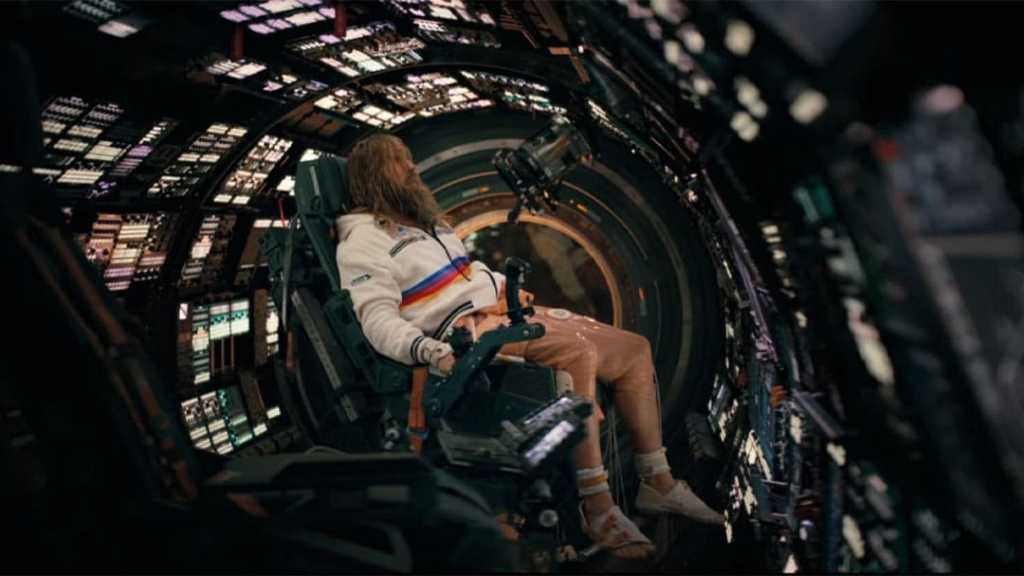
Interstellar who? Project Hail Mary probably has the best 70mm IMAX cinematography I’ve seen yet. It’s the best space movie I’ve seen in a long time, certainly. Ryan Gosling acts his heart out opposite a faceless puppet—and it works. I can’t explain why, but it does.
This is great sci-fi with believable science, courtesy of Andy Weir. I mean, I won’t pretend like I understood all the molecular biology but the movie put it in terms I could follow along with. (Christopher Nolan, please take note.) Project Hail Mary has heart, humor, tension, and plenty of majestic space moments. It’s also got a hefty runtime, which I felt at times, but I suppose it adds to the gravitas of it all. It’s a big, epic sci-fi blockbuster worth taking the whole family out on a trip to the movie theater to see.
Minority Report
United States of America | 2002 | 145m | English, Swedish
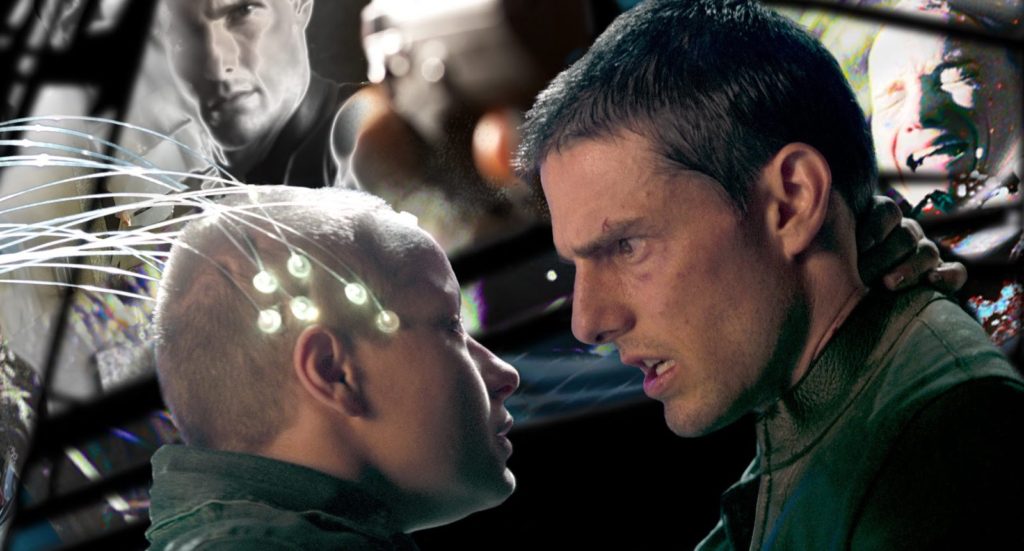
The 16mm projection at the Revue Cinema looked… not great, to be honest. Like watching a low quality YouTube rip. The picture didn’t even fill the screen. But maybe that format worked well for this story, making everything seem like some kind of hazy dream—or premonition. Details never quite sharp enough to feel all the way real. This was my first time seeing Minority Report, and I gotta say, for most of it I was totally locked in. That’s despite some truly bizarre performances from most of the supporting cast, not to mention ham-fisted screenwriting (Tom Cruise, grabbing the photo of his son, conveniently laid out before him on the stranger’s bed, eyes directly into the camera: “That’s my son. That’s Sean.”). The movie is tense and exciting when it needs to be, and I was kept guessing how the story would go all the way to the end. The early 2000s CGI looked garish, of course, but with the aforementioned hazy projection, it was kind of a vibe. Two and a half hours is too long, though!
Other Movies I Saw This Month
- Superbad (2007) [4/5]
- Beijing Watermelon (1989) [4.5/5]
- The Red Shoes (1948) [3.5/5]
- California Split (1974) [4.5/5]
- Woman in the Dunes (1964) [4.5/5]
- Kiki’s Delivery Service (1989) [3.5/5]
- Mad Max: Fury Road (2015) [4.5/5]
- The Love That is Wrong (1993) [1.5/5]
Best Movies I Saw This Month
- Mad Max: Fury Road
- Project Hail Mary
- Beijing Watermelon
- Woman in the Dunes
Worst Movie I Saw This Month
- The Love That is Wrong


 Josh Anderson