

It’s been a while since I’ve posted on this blog, but that doesn’t mean I have stopped writing. As a matter of fact, I’ve been writing more than usual, having finally settled into a consistent habit of posting my reviews of each movie I watch on Letterboxd, a social media platform designed for that sort of thing. Really, I’m not sure what took me so long to sign up there.
The once-a-month writing cadence that I had going for this site was beginning to become a bit overwhelming, as I have consistently been watching more and more movies each month. Furthermore, I had been waiting until the end of the month to write all of the reviews at once, which meant that I was forgetting enough details about each film that I felt the quality of the reviews suffered. Now, as an active Letterboxd user, I write each review shortly after finishing each movie—often immediately after.
However, I’m not ready to give up writing about film on this site, so I’ve decided to copy over a selection of my favorite movie reviews each month to post here. Clicking the scores under each review will take you to the original post on Letterboxd.
Universal Language

Canada | 2024 | 89m | French, Farsi
After seeing its trailer play before one of my showings of The Brutalist, I decided to give the absurdist Canadian comedy Universal Language another shot. When I reviewed it after first having seen it at last year’s Toronto International Film Festival, I lamented its “unclear plot” that didn’t explore the corridors that I wanted it to, such as how this fantastical Farsi-French version of Canada came to be. For this screening, again at TIFF and again with the director and other filmmakers present, I approached it with the attitude that it’s nonsensical on purpose, surreal rather than serious.
I enjoyed the film better this time around, and the plot seemed much clearer to me until a particularly surreal moment at the end left me once again scratching my head. “We didn’t seek to make a political movie,” explained director Matthew Rankin at the screening, which rules out what seemed to me to be the most obvious interpretation—that of being “replaced,” to return to one’s home only to find others (kind as they may be) having rendered you completely obsolete, even in a role as intimate and unique as between a son and his mother, with the only dignified response to such heartbreak being to gently and tearily-eyed leave everything the way you found it and accept your erasure. I don’t think that’s what the message of the film is; in fact, I don’t think there really is much of a message to the film. Rankin joked at the Q&A that when asked what his movie is about, he answers, “It’s about 89 minutes.” The titular “universal language” is probably referring to the language of cinema, and the mishmash of settings and plot lines that make up the film are above all an excuse for Rankin to marry his love of Iranian cinema with the Brutalism of his humorously nondescript hometown of Winnipeg. Most of the humour is in the deadpan delivery of lines like “Please don’t do your homework in the bath again,” or “My children choked to death in a marshmallow eating contest,” which, to be sure, are kind of funny when you approach the dialogue with the right attitude. But I’m still left searching for a why behind the film, “the most neutral experience of my life.”
Heart Eyes

United States of America | 2025 | 97m | English
It’s tough to balance horror, comedy, and romance, and Heart Eyes… well, doesn’t really pull it off. There are a few strong scenes—all of them in the first act—but by the end, the movie really fizzles out. Characters don’t behave in believable ways, pausing to gently reminisce about their pasts while only moments prior narrowly escaping getting got. There’s a severe lack of tension or energy throughout the film, but none of that will prevent the Heart Eyes mask from lining the shelves of Spirit Halloween this year. It’s a cool design!
Ne Zha 2

China | 2025 | 144m | Chinese
I haven’t been this impressed by CGI fantasy action since Final Fantasy VII: Advent Children. This blows away anything coming out of the US or even Japan.
Sure, like Advent Children, the story here can be hard to follow at times, but I don’t care. (And I saw the first Ne Zha last week. Maybe I just lack familiarity with Chinese mythology…) I had a great time with this movie, and it’s easy to see why it’s demolishing box office records in China one after the other. The character designs are awesome (especially the bald old man Wuliang) and there are some uproariously funny moments, but it’s the epic set pieces and intricately detailed animation that steal the show. There’s such a staggeringly large scale to so many scenes which simply could not have been achieved had this film been anything other than computer animated. Let this be your entry point into Chinese cinema!
Emilia Pérez
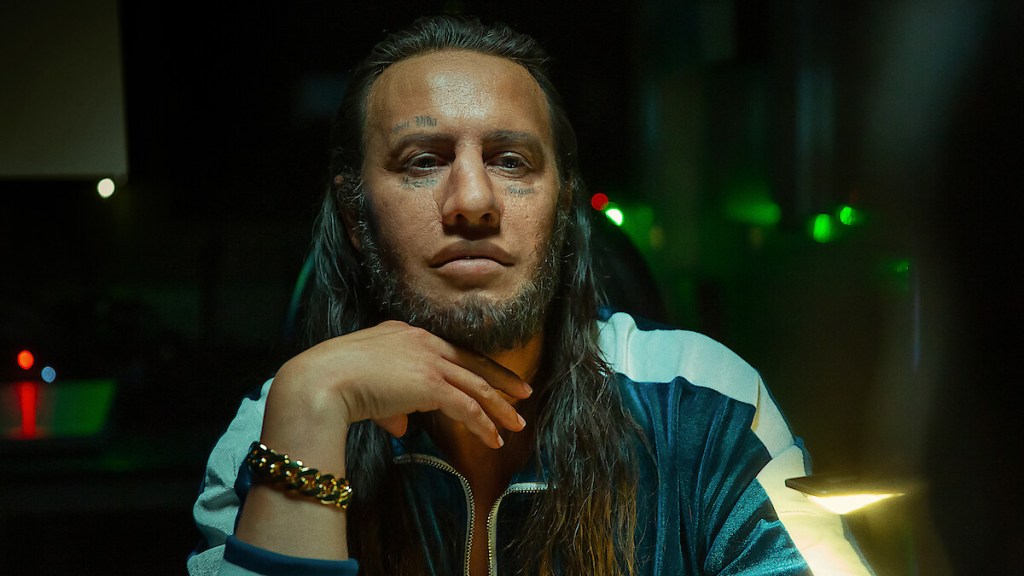
Belgium, France, United States of America, Mexico | 2024 | 132m | Spanish, English
There’s such a sick, deplorable irony in Manitas’s creating a non-profit dedicated to helping the victims of cartels acquire information on their missing and dead relatives, all while keeping up the lie to his own wife and children that he’s dead. A better film—no, frankly, a film with any modicum of a moral conscience—would have explored this irony and given at least one or two of its universally despicable characters a moment to explore where their humanity had gone so, so wrong. Instead, the filmmakers of Emilia Pérez see the tragedy of the story not in how the actions of a supremely selfish, mass-murdering psychopath tore apart countless families—including his own!—but instead in the inconvenience that he can’t kidnap women, subvert democracy, traffic drugs, murder hundreds, and then abandon and lie to his family with zero consequences. “I am what I feel,” sings the monstrous protagonist, a line that inadvertently reveals the utterly sociopathic egocentric hedonism that underpins the moral position of this film.
Emilia Pérez is a movie for people who watched The Silence of the Lambs and thought Buffalo Bill was the good guy. It’s a movie for people who sympathize with school shooters because the bullies made fun of their painted nails. It’s a movie for people who nodded their head in approval when they heard Kevin Spacey defend his sexual assault of a minor by choosing now “to live as a gay man.” Changing one’s sex does not absolve oneself of one’s past evil any more than a Christian preacher’s splashing water on themselves to become “born again.”
I hate this movie and everything it stands for. I hate that I live in a society that thinks there is anything admirable, praiseworthy, or—for God’s sake—award-worthy about this story, these characters, or their behavior.
Also, the music sucked and it was boring.
Conclave

United Kingdom, United States of America | 2024 | 120m | English, Italian, Latin, Spanish
Fantastically shot and admirably acted, but honestly I thought Conclave was a bit dull. As cinematically blasphemous as it may be, there were a few scenes that I set to 1.5x speed (don’t ask me where I watched this movie) and yet I found myself questioning whether the setting was in effect or whether I was still watching at the grindingly slow normal pace.
As a non-Catholic, I find the pomp and circumstance of the papal conclave to be amusing in its visual spectacle and self-seriousness, but on a spiritual level it moves me about as much as I imagine I would be moved if I saw a gathering of D&D Dungeon Masters in full cosplay earnestly debating what to change in the next edition of the rulebook. To me, it’s just all so… silly and inconsequential.
The twist ending is the most thought-provoking and worthwhile part of the film. On the one hand, it feels like the juicy worm hooked to the end of the Oscar bait (ask yourself, would Hollywood in 2025 possibly consider showering accolades upon an overtly Catholic film without such a plot point as this?) but in context with Cardinal Lawrence’s early homily about certainty as sin, I think it actually works well in pulling the story together.
The Apprentice

United States of America, Canada, Denmark, Ireland, Sweden, United Kingdom | 2024 | 122m | English
Sebastian Stan’s Donald Trump impression has flashes of spot-on brilliance, but it’s Jeremy Strong’s performance as Roy Cohn that steals the show in The Apprentice. I think it’s my favorite acting performance of any movie this year. Watching these two men play off each other made The Apprentice wildly entertaining from start to finish—and I say this as an American conservative whose 2024 vote would most certainly place me well outside the target audience for this movie.
I loved the cinematography, with its 4×3 aspect ratio and film grain shifting to match the aesthetics of both the 70s and 80s as the story progressed. The synth soundtrack kicked ass, too, with its sudden needle drops accentuating certain disturbing moments. I think my experience with this film was also greatly enhanced by having recently read Trump Revealed, the 2016 biography penned by a phalanx of Washington Post writers. I have no doubt that the filmmakers drew heavily from that book, since I recognized many anecdotes and direct quotes lifted from it. Sometimes it felt like the script was a little overeager to shoehorn in expository character details to the detriment of the believability of some scenes. For example, why would Fred Trump Jr. wear his uniform—pilot wings badge and all—to dinner inside his parent’s home if not to give the movie an excuse to point out his profession? And am I really supposed to believe that at his first meeting with Donald Trump, Roy Cohn would just so happen to be in the middle of bragging about his involvement with the Rosenbergs, among friends and associates who most certainly would already know that about him?
The story is at its most powerful when it focuses on Cohn’s character arc, going from ruthless sociopath to feeble, lonely AIDS patient realizing with belated, impotent horror that he groomed Trump into treating him exactly the way he deserved to be treated, but the filmmakers couldn’t resist all-too-often turning the spotlight to anachronistic jingoism from the man of the hour—future President 47. The film may not age well, as it ultimately proved as vain an attempt to thwart his reelection as the bullet that grazed his ear, but before this movie is inevitably obsoleted in the future by a grander, more sweeping film that tells Trump’s full story from start to finish, I hope Jeremy Strong picks up the Oscar for Best Supporting Actor that he so clearly deserves.
Raging Bull

United States of America | 1980 | 129m | English
Raging Bull is a tough film to criticize because it doesn’t really do anything wrong—and Robert De Niro gives probably the best performance he ever will. It’s just that Jake LaMotta’s story doesn’t particularly resonate with me, and the themes that the film deals with feel very obvious and surface level to me: If you’re a violent asshole, you’ll probably alienate the people around you. I mean… yeah. Of course.
Compare this to my favorite film by Scorsese, The Wolf of Wall Street, which deals with not only a selfish asshole getting his comeuppance, but also with the society that enables his behavior and eventually rewards him with a second chance to continue his grifting, to audiences that are fully aware of what kind of man he is but simply don’t care. There’s a lot more to think about there. Raging Bull, while I can acknowledge its greatness, just didn’t stir me as much as I hoped it would.
The Man Who Could Not Remain Silent
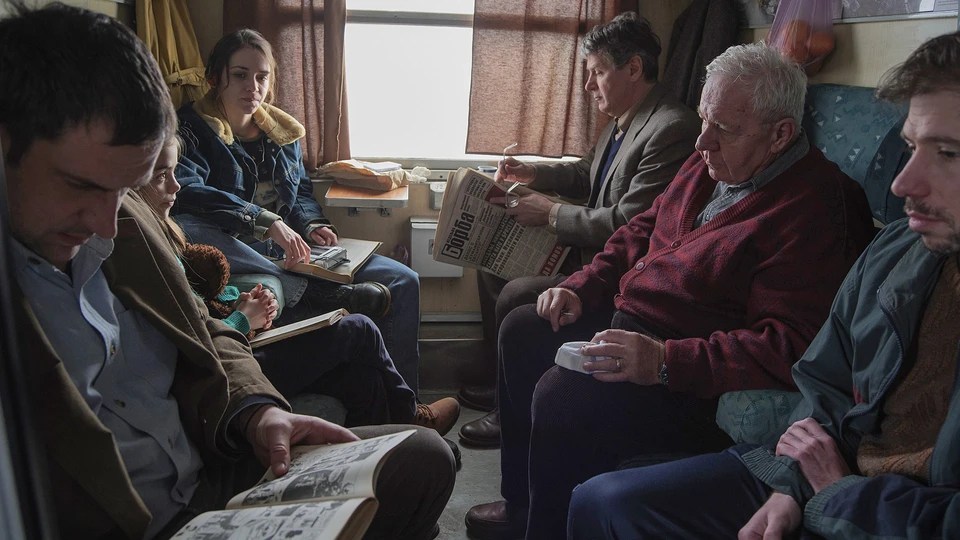
Bulgaria, Croatia, France, Slovenia | 2024 | 14m | Croatian
Stories of regular people standing up against authoritarianism move me like few others. The whole time while watching The Man Who Could Not Remain Silent, I was uncomfortably reminded of the years of COVID madness and the cowards—numbered in the tens if not hundreds of millions—who said and did nothing when people were being fired from their jobs, kicked out of school, harassed in public, denied access to grocery stores, forced to die in isolation, etc. all for insisting on retaining their bodily autonomy. Now, this film showcases a time in history where the threat of state violence for noncompliance was a bit more, shall we say, immediate, but I’ll never forget the recent past when I witnessed firsthand how truly rare courage actually is. This excellent and effective short film reminded me of that and stirred me deeply.
Anuja

United States of America | 2024 | 23m | Hindi, English
Great short film about two resourceful girls who manage to find a path—arduous as it may be—out of the absolute hell of Indian sweatshop life. The end credits, however, mar the entire film by diminishing the ingenious and ambitious efforts of the girls to pull themselves out of poverty when suddenly the whole story gets framed as a charity plea. Turns out it’s hardly the efforts of the girls that made the difference—it’s the viewers sitting at home watching this on Netflix whose sympathy donations made the difference—and wouldn’t it be great if you joined them? It’s giving white savior complex!
A Lien

United States of America | 2023 | 15m | English
This one challenged me. I guess that’s why I go to the cinema, after all. Full disclosure: I support deporting illegal immigrants and see no reason why the United States ought to be the one and only country on Earth that makes an exception to that principle. A Lien forces the viewer into the shoes of a family who get broken up by ICE—an incident portrayed as all the more vexing because it happens during the married couple’s attempt to interview their way into a green card for the husband who has no legal status in the country. As a piece of filmmaking, I found it effective, although I was cognizant of some of the narrative tricks to try to boost the heart rate of the audience (of course they ‘re running late to their appointment!). This film made me pause and deeply evaluate the positions I hold, which is more than I can say about most of the movies I watch—short or feature-length. For that, I can appreciate A Lien as a compelling cinematic position piece.
Dreams Under Confinement
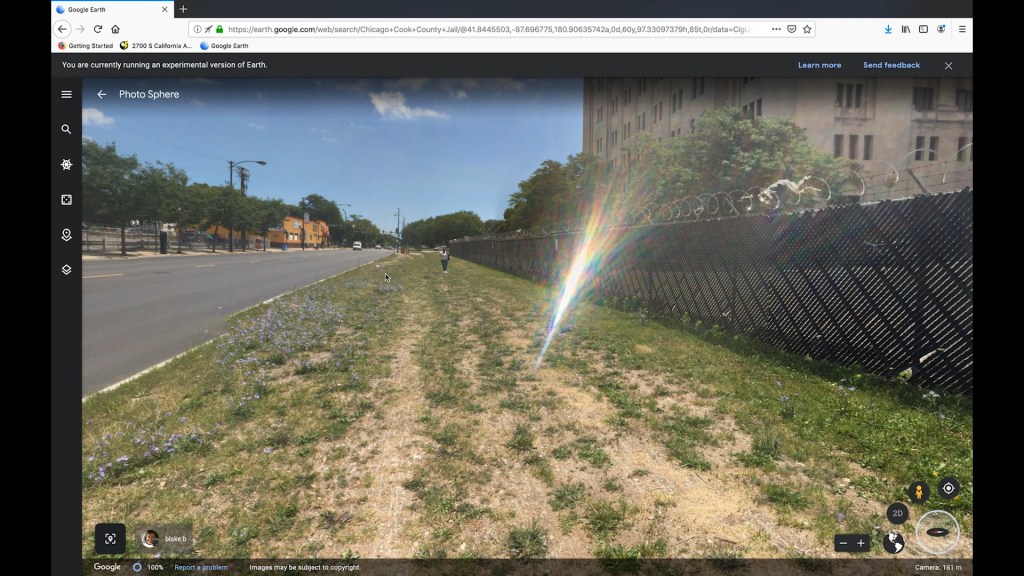
United States of America | 2021 | 3m | English
Swing and a miss. Without the context provided by both Letterboxd’s description + the fact that I attended a screening of this with director Christopher Harris explaining what he was going for, I would have had no clue what this brief, chaotic film was trying to convey.
The harsh cacophony of police scanner audio did not hit my ears as an overwhelming montage of state-sanctioned violence, as I think was intended, but rather as an indecipherable wall of noise (the only word I managed to clearly make out towards the end was “animals”). The hyperactive twisting and turning through street-level Google Earth photos, similarly, left me disoriented more than anything else. Again, without the crucial context of Harris’s intentions—provided outside of the film itself—I honestly would have been more likely to have guessed this was a commentary on busy traffic or neglected infrastructure or surveillance or prison architecture or any number of other things, especially since the visuals are at complete odds with the content of the audio.
Later this same night, I watched Incident as part of an Oscars 2024 Documentary Shorts Nominees presentation, which deals with similar themes (and even focuses on the same city, Chicago) but conveys its ideas in a far more effective and powerful manner because its directors took painstaking effort to edit publicly available police scanner audio, body cam footage, and street camera photography to paint a 360-degree picture of the police’s killing of a black man for dubious reasons. There’s something to be said about carefully laying out one’s ideas in a coherent manner rather than chaotically mashing everything together with all the subtlety of a blender and then hoping the viewer can decipher what they’re being presented with.
Reckless Eyeballing
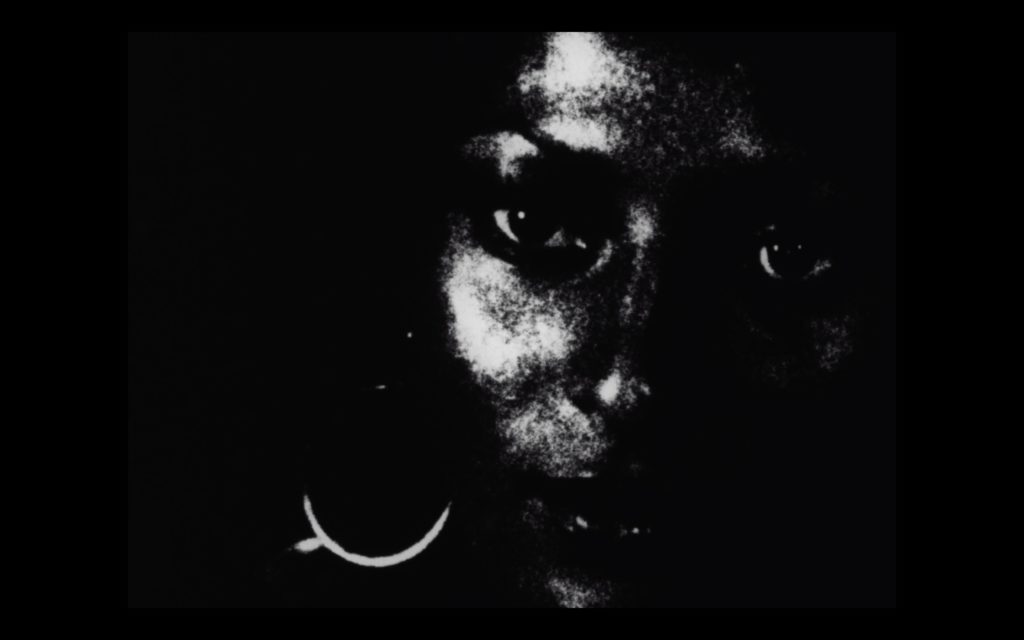
United States of America | 2005 | 13m | English
Not so much a movie as it is a studio art piece that happens to use film as its medium, Reckless Eyeballing had me entranced from beginning to end. There’s always something striking happening both aurally and visually, and even though quite a bit of material is repeated throughout the short piece, there are enough subtle differences in the way it’s presented as the film progresses that it kept me watching and thinking.
Low-key analogue horror vibes, too, especially when watching this on a big screen in a darkened theater, as I did. If Christopher Harris had wanted to throw in a jump scare at any point, it definitely would have spooked me 👻.
still/here

United States of America | 2001 | 60m | English
Vanishingly few frames of this film depict actual people, and yet people—specifically black St. Louisans—are an all-encompassing presence in every shot of still/here. The brick buildings—assembled by hand, as the opening monologue reminds us—are the most obvious example. But there’s also the way that the camera travels along the road, moved by an unseen driver, or the sparse, resonant music plucked by human hands, or the dilapidated signage depicting dreams and desires long abandoned, or the crackled speech of radio ads whose transmitted vibrations settled long ago. I would be lying if I said I wasn’t feeling the film’s length towards the end, especially when the audio quiets and the shots of stationary bricks go undisturbed for longer and longer. However, the tension created by the obvious artifacts of (black) human life juxtaposed against director Christopher Harris’s near-refusal to ever put a real live human on the screen is what keeps still/here an interesting, slow, contemplative experience.
Instruments of a Beating Heart

Japan | 2024 | 23m | Japanese
It’s probably true that the reason this resonated so particularly deeply with me is because it reminded me of my time on the JET Program working at Japanese elementary schools, but I genuinely loved the narration-free, matter-of-fact way that the film depicted the drama of this season in the young protagonist’s life. Far from being an insignificant story, up until this point in her life, this may well be the biggest trial she’s ever faced—and overcome. It’s a film that lovingly places us in the perspective of a child and reminds us what it’s like to be that age and how all-encompassing, important, and formative an experience of timing the cymbal hits during a one-off live performance of “Ode to Joy” really can be.
I Am Ready, Warden

United States of America | 2024 | 37m | English
I was surprised by the complexity of emotions this stirred in me. The choice to focus not only on the thoughts and experiences of the death-row inmate but also the son of his victim (not to mention the inmate’s own son), plus the community of death-penalty-adverse Christians who rallied around this case painted a fascinating picture where there are no easy or truly just solutions available. Deeply thought-provoking.
Other Movies I Saw This Month
- The Philadelphia Story (1940) [3/5]
- Detective Chinatown 1900 (2025) [2.5/5]
- Angry Video Game Nerd: The Movie (2014) [0.5/5]
- 12 Angry Men (1957) [4.5/5]
- Frozen (2013) [4/5]
- Ne Zha (2019) [3.5/5]
- Jokers Wild (2025) [3/5]
- Sunset Boulevard (1950) [4/5]
- Username:666 (2008) [2.5/5]
- Magic Candies (2024) [3.5/5]
- In the Shadow of the Cypress (2023) [3.5/5]
- Yuck! (2024) [2.5/5]
- Wander to Wonder (2023) [2.5/5]
- Beautiful Men (2023) [1.5/5]
- The Last Ranger (2024) [3/5]
- Incident (2023) [4/5]
- I’m Not a Robot (2023) [3.5/5]
- The Only Girl in the Orchestra (2023) [3.5/5]
- Death by Numbers (2024) [2.5/5]
- The 40 Year Old Virgin (2005) [3/5]
- Boogie Nights (1997) [5/5]
- The Seventh Seal (1957) [1.5/5]
- His Motorbike, Her Island (1986) [5/5]
- Psycho (1960) [4/5]
Best Movies I Saw This Month
- His Motorbike, Her Island
- Ne Zha 2
- Instruments of a Beating Heart
Worst Movies I Saw This Month
- Angry Video Game Nerd: The Movie
- Emilia Pérez
- Dreams Under Confinement


 Josh Anderson